
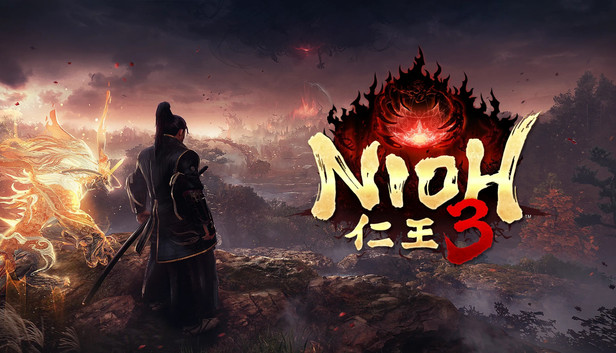



The Nioh 3 demo is available now on PS5 and PC (Steam), and it’s a surprisingly meaty “opening chapters” slice that supports three-player co-op and carries your progress into the full game.
It also doubles as a clear statement of intent: Nioh 3 aims to evolve the series’ brutal Souls-like loop with open-field exploration and two distinct combat styles you can swap on the fly.
Release info
Team NINJA’s official demo page confirms the demo supports online multiplayer for up to three players and that demo save data transfers automatically to the full game (on the same device).
The PlayStation Blog also reiterates save transfer and the “up to three players” online mode, making it ideal if you want to learn systems now and roll straight into launch.
Completing the demo by Feb 15, 2026 grants an in-game bonus item (Twin-Snake Helmet) in the full game.
Why Nioh is “Souls-like”
At its core, Nioh shares the Souls-like contract: high lethality, strict resource management, and boss fights that demand pattern learning, timing, and calm execution. (That’s the tension that makes every shortcut, shrine, and clean run feel earned.)
Where Nioh traditionally differs is pace and depth of expression: it’s closer to an action game with RPG loot/build layers than a pure methodical duel simulator, so mastery often looks like controlling tempo rather than simply surviving.
The mechanics that define Nioh combat
Two pillars typically separate Nioh from most Souls-likes: stance-driven movesets and Ki management via Ki Pulse, which rewards precise timing by letting you recover Ki efficiently and keep pressure.
Stances (high/mid/low) effectively act like three “modes” per weapon—letting you trade raw damage for safety, speed, or control—so even basic encounters become a micro-puzzle of spacing and risk.
This is why Nioh combat can feel relentless in a good way: you’re not only reacting to enemies, you’re building momentum and trying to maintain it.
What Nioh 3’s demo adds: open field + Samurai/Ninja styles
The demo content is built around an “open field overrun by yokai” in the Warring States period, where you choose your route, collect gear, tackle side missions, and eventually enter the Crucible around Hamamatsu Castle Town to face a yokai boss.
On the official site, Nioh 3 is framed around seamless switching between “Samurai” and “Ninja” styles in combat, which should meaningfully change how you approach the same enemy types (pressure/defense vs mobility/angles).
That blend—open-field tension plus style swapping—reads like Team NINJA trying to widen player expression without sanding off the series’ edge.
Beginner tips box (no spoilers)
-
Treat Ki like your real HP bar: if you run dry at the wrong time, you get punished, so build short attack strings you can always “afford.”
-
Use stance swaps deliberately: low stance to stabilize and learn patterns, mid for consistency, high when you’ve earned a safe window.
-
In co-op, assign roles implicitly: one player baits and blocks, one punishes from the side, one watches for adds/interrupts (three-player online is supported).
-
If you’re on the fence, play until the Crucible section: it’s the best “do I like Nioh?” filter because it concentrates the series’ combat rhythm into a focused challenge.
What’s in the demo (and why it matters)
The demo is designed as a substantial pre-launch test, with multiple sources noting it’s not just a tiny “vertical slice” but something you can meaningfully progress through (and then carry forward).
Press coverage in Italy also reports that the demo includes character customization right away and supports co-op up to three players, reinforcing that Team Ninja is leaning into experimentation and replayability from minute one.
Early impressions: the direction of Nioh 3
Hands-on impressions point to a formula that feels more “exploration-friendly” and modern in its movement and traversal (with quality-of-life additions and more verticality being repeatedly emphasized).
If these changes hold in the full release, Nioh 3 may land closer to “mission-based action RPG with broader spaces and smarter navigation tools” rather than only tightening combat and loot.
Quick verdict on Nioh
Critics generally praised the original Nioh for its refined, challenging action-RPG combat and for carving out its own identity despite obvious Souls inspirations.
Review roundups and critic pages also frame Nioh as content-rich and mechanically deep—often singled out for combat feel and build/loot variety, even when story delivery is seen as less central.