
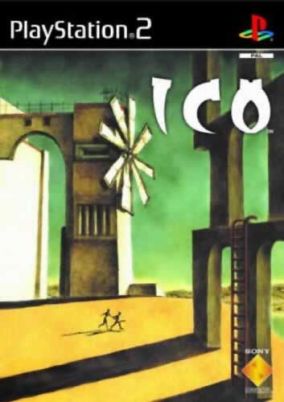



Ico — holding hands through a haunted daydream
Presentation
Ico distilled action‑adventure into atmosphere and intent: minimalist dialogue, vast negative space, and painterly lighting channel a wordless bond between a horned boy and a pale girl through a sun‑bleached fortress of stone and shadow. Sparse combat against inky, grasping shades exists chiefly to underscore vulnerability and urgency, while platforming and environmental puzzles play out with wide camera framings that make rooms feel like stage sets designed for silhouettes and light. The absence of HUD clutter and the prominence of sound—wind, gulls, echoing footsteps, and Michiru Oshima’s delicate themes—give the castle a living hush that stands apart from its era’s louder spectacles.
Story
Born with horns, Ico is sealed inside a sarcophagus in an ancient castle as a ritual sacrifice; breaking free, he discovers Yorda, a mysterious girl imprisoned in a cage and speaking a language he cannot understand. As they attempt escape, shadow creatures try to drag Yorda into portals, and the castle’s Queen reveals a plan to claim Yorda’s body to prolong her own life, severing the bridge and casting Ico into the depths to stop them from leaving. Ico ascends back with a magic sword, confronts and defeats the Queen, shattering his horns in the struggle; with the castle collapsing, a shadow‑form Yorda rescues him and sets him adrift by boat, a final, fragile grace note that leaves meanings open yet resonant.
Systems and structure
-
Companion design. The core verb is taking Yorda’s hand to guide, pull, and steady her, with contextual calls and positioning puzzles that make protection and traversal a single mechanic, not separate mini‑games.
-
Spatial readability. Large, fixed‑but‑shifting camera compositions emphasize landmarks and light paths, steering players gently without explicit markers, while combat is brief, timing‑oriented, and deliberately secondary to navigation.
-
Environmental keys. Yorda’s luminous seals open doors Ico cannot, embedding progress into the relationship itself and ensuring separation becomes both narrative and mechanical peril to resolve.
Length and co‑op
Typical first‑run completion takes roughly 6–8 hours, with subsequent runs faster as spatial logic “clicks”; optional extras include a second‑playthrough translation for Yorda’s speech in some versions and small routing optimizations. The game is single‑player only; there is no official co‑op mode, though anecdotes about save‑based quirks or emulator tinkering exist in communities without being part of supported features.
Reception and critique
Critics and retrospectives frame Ico as landmark minimalism: intimacy through mechanics, environmental storytelling over exposition, and a blueprint for companion‑led adventures that influenced a generation of designers. Some note occasional camera fussiness and simplistic combat loops, but consensus holds that pacing, mood, and the tactile act of hand‑holding transform traversal into narrative, achieving rare emotional clarity for the time. Its legacy persists in the “Team Ico” lineage and in the broader vocabulary of gentle guidance, soft diegesis, and relationship‑centered mechanics across modern indies and triple‑A alike.
Critics’ scores
-
Metacritic — 90+ “universal acclaim” tier for PS2 original; all posted critic reviews positive across tracked outlets.
-
IGN — highly positive contemporary review praising atmosphere, shadow‑enemy presentation, and environmental puzzle design.
-
Eurogamer and other retrospectives — sustained acclaim, acknowledging minor combat/camera irritations while celebrating restraint and mood.
-
MobyGames collated reviews — high‑80s to low‑90s averages across platforms/editions, reflecting enduring critical esteem.