
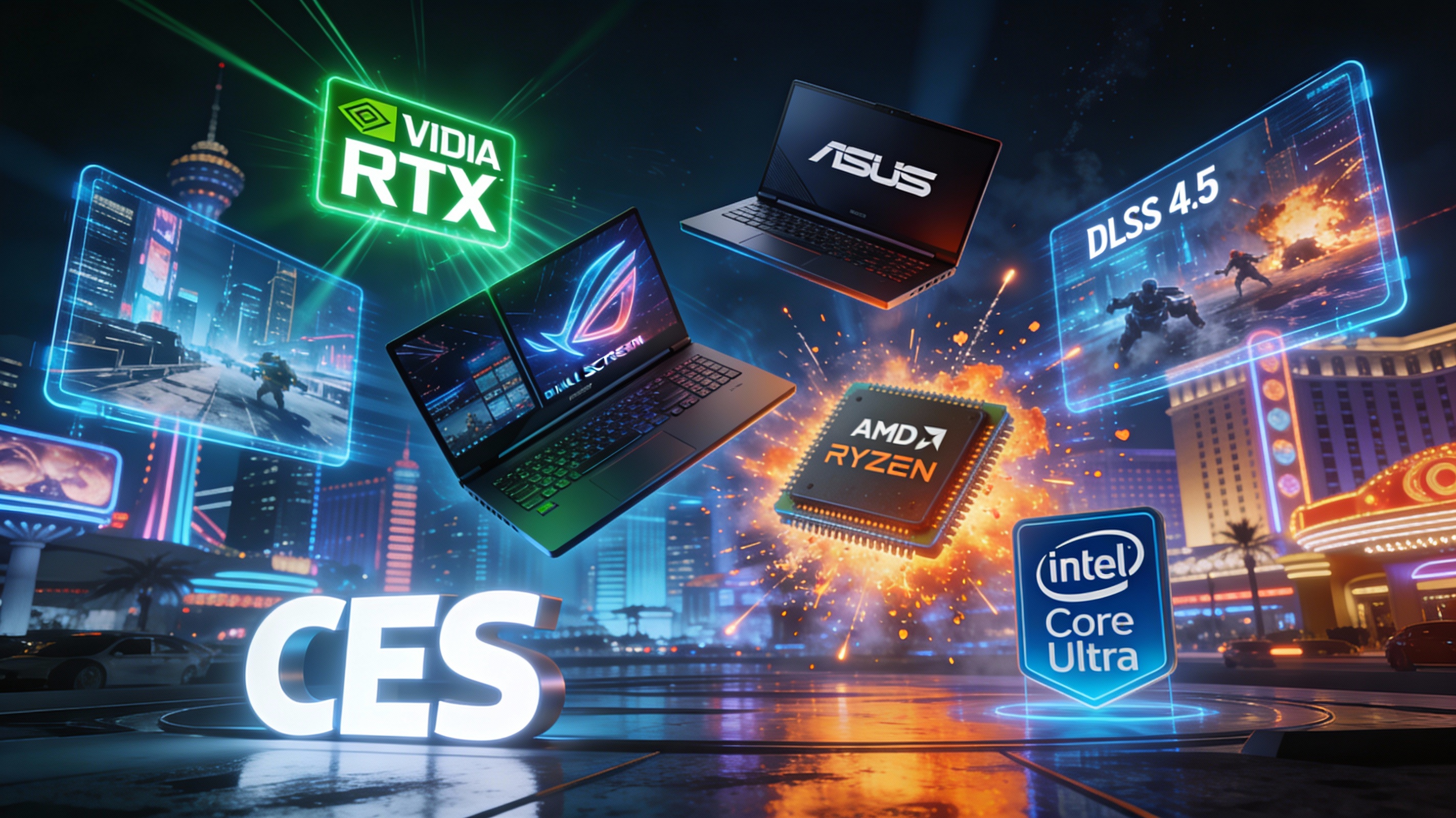



CES 2026 delivers groundbreaking gaming hardware and tech upgrades, spotlighting AI-driven rendering, dual-screen laptops, and RTX enhancements for upcoming titles.
NVIDIA’s DLSS 4.5 and RTX Game Integrations
NVIDIA unveiled DLSS 4.5 at CES 2026, featuring a second-generation transformer model for superior Super Resolution image quality and 6X Dynamic Multi Frame Generation for smooth 240+ FPS in 4K path-traced gaming. Over 250 games now support DLSS 4 with Multi Frame Generation, with new integrations announced for 007 First Light, Phantom Blade Zero, PRAGMATA, Resident Evil Requiem, Active Matter, SCREAMER, and DEFECT. NVIDIA ACE enhances AI in Total War: PHARAOH and PUBG: Battlegrounds “Ally” update, while GeForce NOW expands with RTX 5080-class performance on Linux PCs, Amazon Fire TV, and HOTAS support for simulations.
ASUS ROG’s Next-Gen Laptops and Peripherals
ASUS ROG celebrated 20 years with CES 2026 innovations like the ROG Zephyrus Duo (16CX), a dual 16-inch 3K OLED gaming laptop (120Hz refresh) powered by Intel Core Ultra Series 3, up to RTX 5090 Laptop GPU, and increased TGP up to 160W on the G16. The ROG Flow Z13-KJP collaborates with Kojima Productions, featuring AMD Ryzen AI Max+ 395, Radeon 8060S, and a 13.4-inch 2.5K Nebula HDR touchscreen. New ROG G1000 desktop boasts AniMe Holo projection, up to Ryzen 9 9950X3D and RTX 5090, while Crosshair X870E motherboards include AI Overclocking and Q-Release features.
AMD, Intel, and Broader Hardware Highlights
AMD showcased Ryzen 7 9850X3D for PC gaming and Ryzen AI 400 series processors. Intel debuted Core Ultra Series 3 as the first built on its next-gen architecture, emphasizing AI PCs with superior performance, graphics, and battery life. Partners like Samsung introduced a 1,040 Hz G-SYNC monitor and QD-OLED panels, with ASUS unveiling 240 Hz Micro-OLED gaming glasses.
Key Impacts for Gamers and Developers
These CES 2026 announcements push boundaries in AI rendering, portable power, and immersive displays, setting the stage for 2026 releases like Resident Evil Requiem (Feb 27) and Phantom Blade Zero (Sep 9). Gamers gain higher frame rates and realism, while creators benefit from on-device AI tools across RTX ecosystems. Expect widespread adoption in AAA titles, cloud gaming, and esports hardware throughout the year.